The clitoris is the most easily overlooked yet most crucial pleasure center in a woman’s body. Everyone has it, yet countless women and their partners still have the same question during intimacy—”Have we really found it?”
If you want to truly understand the mechanisms of female pleasure, starting with the clitoris is the most reliable, direct, and effective approach. This article will explain the most basic but most important content clearly: what the clitoris is, its actual structure, its location, why it is so sensitive, and its core role in sexual pleasure.
What is the clitoris?
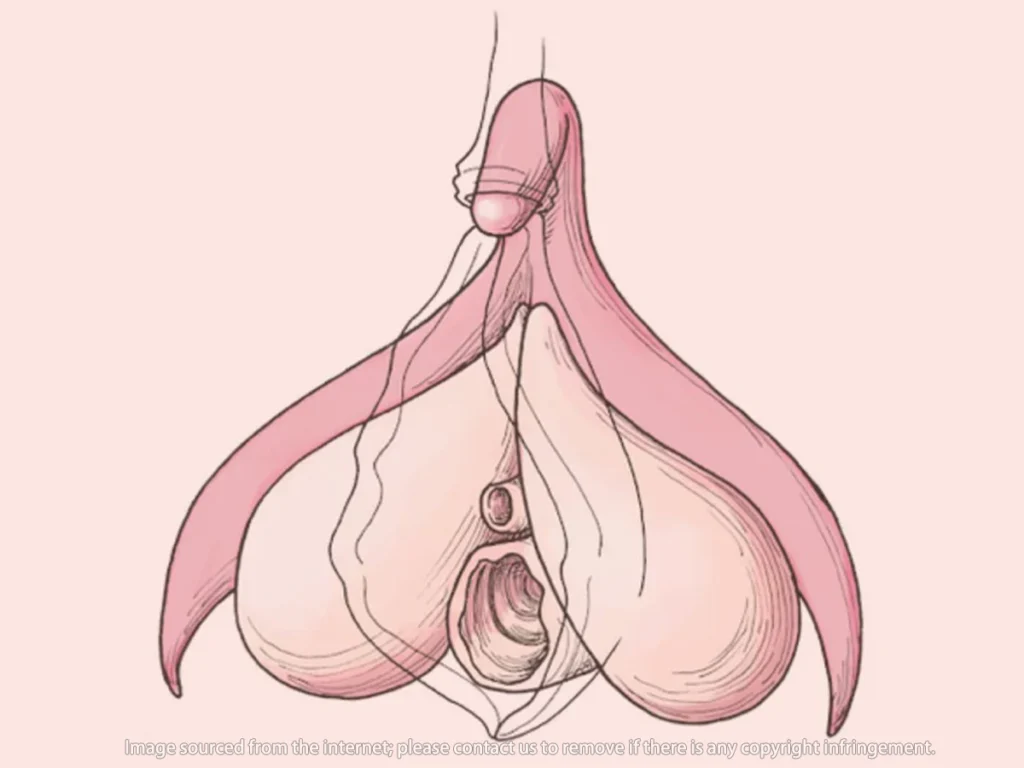
the clitoris is one of the most underestimated organs in the female vulva—yet its function is crucial. Most people only see that tiny external part: the small protrusion located above the vulva and above the urethral opening, known as the “clitoral glans.” But this is only the tip of the iceberg of the entire structure.
The actual clitoris is far larger than what is visible to the naked eye. Its interior consists of paired erectile tissue, nerve plexuses, and two “leg-like” structures, forming an inverted “Y” shape that extends towards the vagina and pelvis. In other words, what you see is only the external tip; the true structure lies hidden inside, and is much larger and more complex.
More importantly, the clitoris has almost a single anatomical purpose: to bring pleasure. Unlike the uterus, it doesn’t have a reproductive function, nor does it have multiple uses like the vagina. Its design is very straightforward—a highly sensitive tissue composed of over 8,000 nerve fibers, specifically designed for the generation and amplification of sexual pleasure.
Whether it’s the excitement from a light touch or the orgasm caused by sustained stimulation, the vast majority of women’s sexual pleasure is inseparable from the clitoris. It is the central control point of the entire pleasure system, but it has been discussed too little and understood even less in the past.

Where is the clitoris? How can it be located precisely?
If you only know “roughly in the upper part,” that’s not enough. This section will use the most intuitive and straightforward method to show you the exact location of the clitoris.
Let’s start with the most basic visual location: the exposed part of the clitoris—the glans clitoris—is located at the top of the vulva, at the apex where the two labia minora meet. There is usually a small fold of skin here, which is the clitoral hood, covering that tiny but highly sensitive “button”.
A simple way to locate it is to use three reference points:
Clitoral foreskin → Clitoral glans → Urethral opening.
The clitoris is located at the very top of this structure, usually higher than the urethral opening and closer to the pubic bone.
Your perception of its location may vary slightly depending on your posture:
- When lying down, the vulvar structure is more relaxed, and the clitoral glans may be slightly covered by the foreskin, making it appear more concealed.
- When sitting or squatting, the labia minora will naturally open a little, making the clitoris easier to identify.
If you want to be more certain, you can use a mirror to help you observe. Gently separate the labia minora, and you will see a slightly raised dot or bead-like structure; that is the glans clitoris. Touch it gently, because the nerve density here is extremely high, and even a light touch is enough to make you feel sensitive or tingly immediately.
Once you understand these reference points and positional differences, you’ll find that the clitoris isn’t hard to find; it’s just that it lacked the opportunity to be clearly explained in the past.
What is the function of the clitoris?
The importance of the clitoris is actually greater and more fundamental than most people realize: it is the core source of pleasure and orgasm for the vast majority of women. Studies generally indicate that more than 80% of women need direct or indirect clitoral stimulation to achieve orgasm—this is not a “preference,” but rather determined by the structure itself.
The clitoris’s dense neural network makes it play a key role in sexual arousal. Even a slight touch can send strong pleasure signals to the brain, triggering a series of systemic responses: increased heart rate, muscle tension, changes in breathing, and those gradually immersive sexual sensations. For many women, vaginal stimulation alone is not enough to elicit these responses, but adding clitoral stimulation instantly enhances overall arousal.
Its role extends beyond pleasure; it is also closely related to sexual health. The clitoris’s engorgement during arousal promotes natural lubrication of the vulva and vagina, making sexual activity smoother and more comfortable, and reducing unnecessary friction and pain. The more fully it participates, the more naturally the body can enter a healthy and complete sexual response cycle.
We don’t need to portray the clitoris as a “universal switch” but we also can’t ignore its real importance. It is the most important component of the female pleasure system, and only by truly understanding it can we have better sexual experiences, more relaxed intimate interactions, and healthier physical responses.
How many nerves are in the clitoris? Why is it so sensitive?
If you’ve ever wondered, “Why can a light touch make someone gasp?”, the answer lies in its neural structure. Recent anatomical studies show that the clitoris has an average of over 10,000 nerve fibers—far more than the commonly cited 8,000 in earlier research. This is one of the most densely nerve-rich areas in a woman’s body, explaining why it can go from zero to full pleasure in just a few seconds.
These nerves are not randomly distributed; they are specifically designed to transmit pleasure signals, rather than performing other physiological tasks. In other words, clitoral hypersensitivity is not “being fussy,” but rather a structure specifically designed for pleasure.
Because of its extremely high nerve density, light touch is often more effective than heavy pressure. Soft, gradual stimulation makes it easier for the body to relax and increase arousal, rather than being “scared away” by sudden, intense friction. For beginners, the most common mistake is “overdoing it”—rubbing the clitoral glans before the partner is even aroused, instantly turning their anticipation into pain.
A simple principle is:
Slower, gentler, wetter.
This is the only way to truly bring out the advantages of the clitoris’s hypersensitivity, rather than overwhelming it with excessive stimulation.
The clitoris’s high sensitivity is not a burden, but rather the absolute protagonist of pleasure. Knowing how to treat it is the key to making this sensitivity a source of power, not an obstacle.
Is it safe to touch the clitoris during menstruation?
For most people, the answer is yes—it’s safe.
In fact, many women are even more aroused or enjoy clitoral stimulation during their menstrual period. However, it’s important to understand that sensitivity during menstruation fluctuates with hormonal changes, so the experience may differ from that outside of menstruation.
Hormonal fluctuations during menstruation (especially changes in prostaglandins) can make the vulva and clitoris more sensitive than usual—some people find it easier to achieve pleasure, while others feel that even a slight touch is “overstimulating.” Therefore, stimulation during menstruation is fine, the key is to be gentle.
The simple principle is: gentler, slower, and more lubrication.
The body is often drier during menstruation, and using water-based lubricants can significantly reduce discomfort caused by friction while keeping the sensation within a comfortable and pleasurable range. Light touches, avoiding excessive pressure, and starting with indirect stimulation from outside the clitoral hood can all enhance the experience.
Hygiene is equally important.
Although clitoral stimulation does not affect the uterus or interfere with menstrual flow, the risk of infection is slightly higher during menstruation. Therefore, it is recommended to wash your hands and keep your vulva clean before and after using toys.
In short:
Stimulating the clitoris during menstruation is not a problem, as long as it is done in a moderate, clean, and gentle manner.
Just listen to your body’s reactions.

How to locate the clitoris?
By now, you’ve grasped the structure and sensitivity of the clitoris, and its central role in female pleasure. Understanding the body is the first step, but real change comes from exploring it firsthand.
In the next article, you will learn how to accurately locate the clitoris using sight, touch, and bodily feedback, understand whether it’s necessary to retract the clitoral hood, and how to clean and care for this highly sensitive area. We will also clarify an often overlooked question—whether the clitoris becomes erect and how to recognize it.