Many women struggle to achieve orgasm during sex, not because of a lack of intimacy in the relationship, nor because they themselves “have a problem.” What’s truly overlooked is that the clitoris is the primary source of pleasure for most women.
This article focuses on real physical needs rather than romanticizing penetration. You will see:
- Why is clitoral stimulation so crucial in sex?
- Which positions most naturally stimulate the clitoris?
- How to get your partner involved in something exciting (without awkwardness or pressure)
- And how to deal with clitoral pain.
If you want sex to be more physical, rather than based on guesswork or forcing yourself, this article will be a very useful starting point.

Why Do Most Women Need Clitoral Stimulation During Intercourse?
For the vast majority of women to achieve true orgasm during sex, the clitoris is involved. The reason is not complicated: the clitoris is the most sensitive and pleasurable core structure in a woman’s body.
The clitoris is the primary source of orgasmic pleasure.
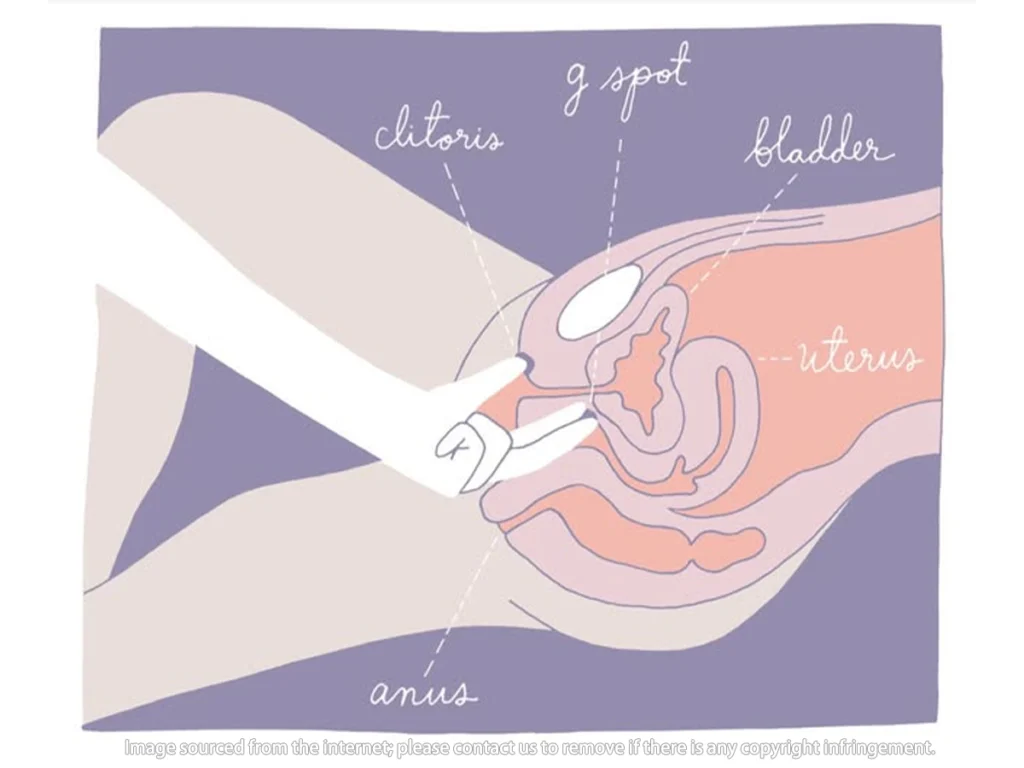
Anatomically, the clitoris is much larger than the small external tip you see; it’s a complex internal structure rich in nerve endings. The nerve density here is far higher than in other areas, making it the easiest place to trigger an orgasm.
In other words, the clitoris is the body’s primary “pleasure button.”
Why doesn’t penetration alone satisfy most women?
While vaginal penetration can certainly bring arousal, it is inherently a certain distance from the clitoris, making it unable to provide sufficient, direct, and continuous stimulation.
Studies consistently show that more than two-thirds of women need some form of clitoral stimulation during intercourse to reach orgasm, whether it is through hands, positions, body friction, or other methods.
This also explains why some women feel “the process is good” yet still cannot reach orgasm—it’s not that you’re not engaged enough, nor that your partner isn’t trying hard enough, but rather that the structure of the body makes it difficult to complete this task through penetration alone.
This is a normal physiological response, not a sexual dysfunction.
Many women worry:
Why is it so hard for me to orgasm during penetration?
“Is there something wrong with my body?”
The answer is: Completely normal.
Only a small percentage of women can achieve orgasm through penetration alone, and even among these women, most would say that adding clitoral stimulation would make the orgasm more intense, deeper, and more satisfying.
In other words:
Needing clitoral stimulation isn’t a flaw—it’s simply how the body works.

Positions That Make Clitoral Stimulation Easier
Getting the clitoris into the “optimal angle of pressure” doesn’t require difficult movements. The key lies in: body position and the friction path. The following positions are considered by many women to be the easiest combinations to “bring the clitoris into the right contact zone.”
1. Cowgirl
— The position with the highest degree of clitoral freedom
The biggest advantage of being at the top is that you can control everything: angle, rhythm, pressure.
This position naturally aligns both pubic bones, allowing the clitoris to naturally rub against your partner during each forward or downward movement.
2. Doggy style (rear-entry)
— Makes the “anterior area” of the clitoris easier to access
Rear-entry isn’t a clitoris-focused position, but it creates an excellent angle: with the body leaning forward, the clitoris is more prominent and easier to stimulate.
The other person’s pubic bone, hands, or even the slightest friction when close to the bed can provide extra pleasure.
3. Side-by-side Spoon
Slow, stable, and with a high degree of fit
The side-lying position allows the two people to be very close together, and with the movement, the clitoris will gently rub along the root of the thigh and the edge of the pelvis.
The pace doesn’t need to be fast; in fact, moving more slowly makes it easier to focus on clitoral sensations.
4. Lap Sitting (Face-to-Face or Face-to-Chest)
— Dual stimulation is the easiest to achieve
The woman sits on the other person’s lap, her body is relatively stable, and her hands are completely free.
You can choose to move back and forth to create pressure on the pubic bone, or you can directly stimulate the clitoris with your hand, making it one of the easiest positions for simultaneous stimulation.
A gentle reminder: More isn’t always better.
The clitoris receives more direct friction in these positions, so moving too quickly or at too steep an angle can easily cause discomfort.
Let your body tell you the rhythm—comfortable friction is more effective than forceful impact.

How can I involve my partner in clitoral stimulation? (Awkward communication)
If you want to incorporate more clitoral stimulation into your sex life, communication doesn’t need to become a “technical meeting.” It can be natural, relaxed, and even a little playful. The key is to treat clitoral stimulation as part of shared pleasure, not as a personal demand.
To make communication flow smoothly, frame it as an invitation, not an instruction.
Most partners aren’t unwilling to participate, but rather they don’t know what you like, aren’t sure how to do it, or are afraid of making mistakes.
When you give clear and easy hints, he will feel more focused and engaged.
Here are some practical, non-awkward ways to express yourself:
1. “At times like this, it would feel even better if you touched me here.”
This sentence structure clearly expresses your expectations without making the other person feel rejected.
It conveys the message that this will excite us all more, rather than “you’re not doing enough.”
2. “I like the speed/force you’re using, don’t stop.”
More specific and easier to use.
Most people actually need this kind of “real-time navigation,” especially when the clitoris is stimulated.
You can replace it with:
- “A lighter touch would be better.”
- “A little slower would be great.”
- “Just stay there, like that.”
These simple sentences work surprisingly well.
3. “Wait a minute, let’s try something that can stimulate this area.”
This phrasing makes him feel like he’s joining an “experiment” rather than being corrected, which creates a more relaxed atmosphere.
Moreover, the phrase “together” is very effective.
4. Talk about the clitoris openly, without shame or beating around the bush.
You don’t need to use euphemisms, nor do you need to be as serious as in a medical class.
You can say it directly:
- “Touch my clit.”
- “Can you help me here?”
- “Rub right on the top.”
The more natural it is, the less awkward it will be.
5. Place clitoral stimulation within a framework where both partners can enjoy it.
It’s not about getting you to “climax quickly,” but about helping you both become more engaged and synchronized.
You can express it like this:
- “When you touch me here, I get into the mood faster, so we can both have more fun.”
This sentence can make the other person understand instantly:
- This isn’t an “extra task,” it’s about “making the whole thing more fun.”
The essence of communication: Both parties are willing to make sex better.
Clitoral stimulation is not the responsibility of one person, but an interaction that can benefit both individuals.
When you treat it as a “shared pleasure” rather than a “personal need,” communication becomes much more natural.

What to do about clitoral pain during sex?
The clitoris has an extremely high nerve density, so when it’s “uncomfortable,” the sensation is amplified and more pronounced. Clitoral pain doesn’t necessarily indicate a serious problem, but it definitely means that your current stimulation methods or physical condition need adjustment.
Here are the most common causes and how to fix them.
1. Dryness: The most common and easiest-to-treat cause of clitoral pain.
Whether it’s insufficient foreplay, excessive stress, or hormonal fluctuations, a lack of lubrication can lead to excessive friction, making the clitoris feel overstretched or irritated.
How to handle it:
- Use water-based lubricant (it’s always worth having).
- Double the foreplay time
- Make your movements gentler, and let your body “wake up” first.
If the dryness is related to menopause or breastfeeding, hormone-based treatments may be necessary as advised by a doctor.
2. Excessive friction: The movement is too fast or the angle is too sharp.
The clitoris has a much lower tolerance than you might think. Excessive friction, too vigorous a rhythm, or continuous stimulation of the same spot can all cause a stinging sensation.
How to adjust:
- Change to a softer angle
- Suspend direct friction and shift to peripheral stimulation.
- Rebuild a “protective layer” with lubricant
Often, simply slowing down a little can significantly alleviate the pain.
3. Infection or inflammation: vulvitis, fungal infection, vestibular gland inflammation
If the area around the clitoris is already red, swollen, and itchy, then stimulation during sex will only make it more painful.
These kinds of situations can’t be overcome by just “enduring it”; they require rest and care.
Related symptoms may include:
- Pain upon touch of the clitoris or labia
- Abnormal secretions
- Burning, stinging
- Obvious redness and swelling in the vulva
What to do:
- Suspend all stimulation
- Keep clean and dry.
- Go for a gynecological examination and use antifungal or antibiotic medications as prescribed by your doctor.
(For example, yeast infections and Bartholin’s gland inflammation both require medical treatment.)
4. Skin sensitivity or chronic problems: such as vulvar lichen sclerosus
When the skin around the clitoris becomes thin, tight, or diseased, friction can cause a “tearing pain”.
How to handle it:
- Avoid any strong friction
- Use the steroid ointment prescribed by your doctor.
- Regular follow-up treatment
If you notice persistent white patches, itching, or skin changes, don’t wait—see a doctor promptly.
5. When must it be paused?
The following situations fall under the category of “stop immediately”:
- The stinging sensation lasts for more than a few minutes
- Lubrication cannot alleviate the problem.
- It feels like burning, tearing, or pricking.
- Abnormal discharge, ulcers, or swelling
- The pain has lasted for more than a week.
Your body is not the “problem” that prevents pleasure, but rather the core part that needs to be taken care of.
Sex shouldn’t be about endurance. Change positions, adjust the rhythm, and prioritize your body’s comfort.
If it’s just a mild discomfort, the simplest and most effective way is usually:
- Change to a position that doesn’t directly press on the clitoris.
- Reduce the intensity of stimulation
- Increase lubrication
- Let your body recover before continuing.
No one can experience pleasure while in pain; you don’t need to force yourself.
Clitoral Sensitivity Enhancement Training
Clitoral sensitivity during sex isn’t determined by “your mood that day.” It is more like a neural pathway that needs to be treated gently and continuously activated.
In this article, we discussed why clitoral stimulation is important, which positions are most effective, how to involve your partner, and what to do when it hurts.
But if you find yourself:
- Increasingly strong stimulation is needed to produce a sensation.
- The clitoris becomes “desensitized” and less easily aroused.
- Or you may always feel that your body and pleasure are “not on the same wavelength”.
The problem isn’t with you.
Your body is simply telling you it’s time to reset its sensitivity. The next article will help you re-establish a more acute and effortless connection with pleasure.