Some women may suddenly find that areas that used to respond to light touch now require stronger and longer stimulation to feel pleasurable. This doesn’t mean you’ve “become worse” or that there’s something wrong with your body—the clitoris, like other sensory organs, is influenced by habits, stress, and patterns of stimulation, and experiencing “desensitization” is perfectly normal.
The main point of this article is to help you understand two things:
Why does the clitoris become less sensitive over time?
And how can we effectively regain our sensitivity?
Next, we will break down everyday behaviors that may cause the clitoris to become “less sensitive,” provide three of the most effective sensitivity training methods, discuss how crucial psychological state is to pleasure, and tell you how to choose toys suitable for “resensitization training.”
The goal is simple: to help you reconnect with your body and bring pleasure back to where it belongs.

What habits can make the clitoris less sensitive?
The clitoris is not like a “switch,” but more like a neural network that needs to be carefully handled. This network is affected by daily habits, stress, and methods of stimulation. Many women’s “insensitivity” does not happen suddenly, but is the result of long-term, accumulated little habits.
Below are three common yet easily overlooked reasons—along with the science behind them.
1. Over-reliance on strong vibrators
High-intensity vibrators are certainly useful, but if you rely on the same type and intensity of stimulation for a long time, the nerve fibers of the clitoris will gradually “get used” to this pattern.
Simply put:
your nerves become conditioned to respond only to very intense vibration.
It’s like getting used to overly loud headphones—normal volume then feels like ‘I can barely feel it.
From a neurological perspective, this is neural adaptation:
When the same stimulus appears frequently, the brain reduces its sensitivity to it to avoid overstimulation—resulting in “gradually becoming less sensitive.”
2. Frequent dry friction stimulation
Whether during masturbation or sex, insufficient lubrication or rough handling can cause direct friction on the nerve endings on the clitoris. In the short term, this may only cause slight discomfort, but in the long term, this stimulation will put the clitoris into a “protective mode.”
Protective mode = Reduces sensitivity to avoid overstimulation of nerves.
In addition, tight pants, lace underwear, and friction during exercise… everyday activities can also create micro-stimulation and pressure on the clitoris. These accumulations can make the clitoris less responsive, requiring stronger tactile input to react.
3. Chronic stress keeps the body in a constant state of tension.
Stress not only affects mood, it can also directly affect clitoral pleasure.
The reason is simple:
Stress puts the body into “survival mode” instead of “feeling mode”.
When you are under prolonged stress, anxiety, sleep deprivation, or mental overload:
- The pelvic floor muscles will contract unconsciously.
- Poor blood circulation
- Inability to focus attention on bodily sensations
- The brain will reduce its response to sexual stimulation.
The nerves of the clitoris rely heavily on blood flow and a relaxed physiological state. The greater the stress, the harder it is for it to enter “pleasure mode.” This is why orgasms become difficult when you are feeling down or overwhelmed—it’s not that your body is inadequate, but that your brain doesn’t have the capacity to process “pleasure signals.”

How to increase clitoral sensitivity? (Three most effective methods)
The good news is that clitoral sensitivity isn’t something that “grows out after use.” Nerves can adjust, blood flow can improve, and stimulation methods can be retrained. The following three methods are the most direct, effective, and sustainable ways to improve sensitivity, each with clear practical steps, truly allowing your body to “get back online.”
1. Change the stimulation method: give the clitoris a break from overstimulation
If the clitoris has become accustomed to a certain type of strong stimulation, what you need to do is not to make it “stronger,” but to change it.
Try different forms of touch
The clitoris has an extremely high density of nerve endings, and can produce different reactions to even the slightest changes in tactile sensation. Try it:
- Gently touch with your fingertips (relax your wrist, do not poke).
- Circular massage
- The surface feel of cotton balls, soft brushes, and silk scarves
- Start around the clitoris, instead of pressing directly on the center.
The goal isn’t to ‘feel more pleasure immediately,’ but to reawaken the nerves so they relearn how to respond to different forms of stimulation.
Reduce intensity, increase layers
If you frequently use high-intensity vibrators, switch to low-frequency, gentle, short-duration stimulation.
You can start from the outer edge of the vulva and slowly move towards the center to make the nerves more sensitive to subtle touches again.
Extend arousal time
When aroused, the clitoris becomes larger and more sensitive due to engorgement.
If you usually skip foreplay, now allow at least 10–15 minutes for your body to “warm up”:
- Kissing
- Gently caress
- verbal communication
This helps your body enter an aroused state and increases the clitoris’s sensitivity to subsequent stimulation.
2. Sensory training: teaching the brain to “refocus on pleasure”
Sensitivity isn’t limited to the clitoris; it extends to your nervous system as well. The key to restoring pleasure is to refocus your brain on your body.
Single-sensory practice
Focus on only one feeling at a time, for example:
- Focusing solely on tactile sensation
- Focusing only on temperature
- Focus only on the rhythm of your breathing
his works like a sexual version of meditation. The goal is to reduce external noise in the brain and focus attention on bodily signals.
Slow, autonomous, aimless masturbation
Instead of thinking “it’s for the climax,” try:
- Slow down by half
- Stop excessive friction
- Focus on exploring different erogenous zones
- Do not force an orgasm
When the brain stops “chasing orgasms,” it becomes more sensitive to subtle stimuli, and the clitoris naturally becomes more sensitive.
Touch map practice
Using your hands, feathers, or fabric, slowly slide from the inside of your thighs down to your vulva to find:
- Which areas reacted faster?
- Which areas need lighter weight?
- Which areas I hadn’t noticed before but are actually very comfortable?
This helps reactivate neglected neural pathways.
3. Pelvic floor muscle exercises: Enhance sensitivity from deep within the body.
The sensitivity of the clitoris largely depends on blood flow and nerve activity, with the pelvic floor muscles playing a key role. When the pelvic floor muscles are strong and can fully relax, the clitoris receives more blood, naturally increasing its sensitivity.
Basic Kegel
The specific operation is simple yet extremely effective:
- Contract your pelvic floor muscles (like holding back urine) for 3–5 seconds
- Relax for 3–5 seconds
- 10–15 times per day
Within a week, many women notice increased sensory awareness in the pelvic area and a quicker clitoral response during arousal.
Deep-breathing and relaxation exercises
Overly tight pelvic floor muscles can suppress pleasure. You can practice this in the shower:
- Take a deep breath and let your stomach expand slightly
- Intentionally relax your pelvic floor during exhalation
- Imagine your entire pelvic area becoming “softer”
This makes orgasm easier and increases sensitivity to stimulation.
Aerobic exercise and blood flow
Running, dancing, yoga, and Pilates can all promote blood circulation in the pelvic area.
Better blood flow = greater sensitivity.

How do psychological factors affect clitoral pleasure?
The clitoris is more than just a physiological organ; it interacts closely with your brain and emotions. Simply put, psychological state can have a greater impact on pleasure than physical stimulation—relaxation, focus, and feeling safe are all important switches for clitoral sensitivity.
1. Flow and relaxation: syncing your brain and body
When you are anxious, tense, or restless, your body naturally enters “survival mode,” with blood flow redirected away from the pelvic area, pelvic muscles tense, and nerve signals having difficulty transmitting. At this time, even strong stimuli may go unnoticed.
The solution is straightforward:
- Deep breathing: Inhale slowly and exhale gently, allowing the tension in your body to gradually release
- Warm water bath or shower: Warm water helps relax the pelvic floor muscles and increase blood flow
- Meditation or attention exercises: Focus on bodily sensations, not thoughts or stress
When you enter a state of “flow”—completely immersed in sensation—the clitoris becomes far more sensitive to subtle touches. In other words, when your brain is not distracted, the clitoris naturally becomes more responsive.
2. Psychological sense of security: The clitoris is very sensitive to the environment and to your partner
The clitoris is particularly sensitive to psychological security. This refers not only to physical comfort but also to a sense of emotional reassurance.
- When with your partner, if you worry about being judged or that your movements aren’t “right,” the clitoris may have difficulty fully responding to stimulation
- If you have distracting thoughts while masturbating, your sensitivity will decrease
The key is to create a psychologically safe environment:
- Communicate your preferences beforehand during sex, such as intensity, rhythm, and positions
- Use language or subtle body language to provide feedback on feelings
- Allow yourself to explore slowly; there’s no need to rush to reach climax
Once a sense of psychological security is established, the nerve fibers of the clitoris can freely “fire,” making each touch more likely to evoke pleasure.
3. Applied to masturbation and sex
- Masturbation: Try turning off your phone, avoiding distractions, and focusing your attention on every subtle reaction in your body
- Partner interaction: Use verbal guidance, gestures, or gentle physical feedback to let your partner know what’s comfortable and what’s not
- Slow down: Don’t rush to orgasm; allow your body and brain time to synchronize their sensations. Clitoral sensitivity will increase with this practice
Clitoral sensitivity is influenced not only by physical factors but also by psychological state. When you are relaxed, focused, and feel safe, your clitoris can fully respond to stimulation—which is why some women find it difficult to experience pleasure even with ample physical contact when they are under stress.
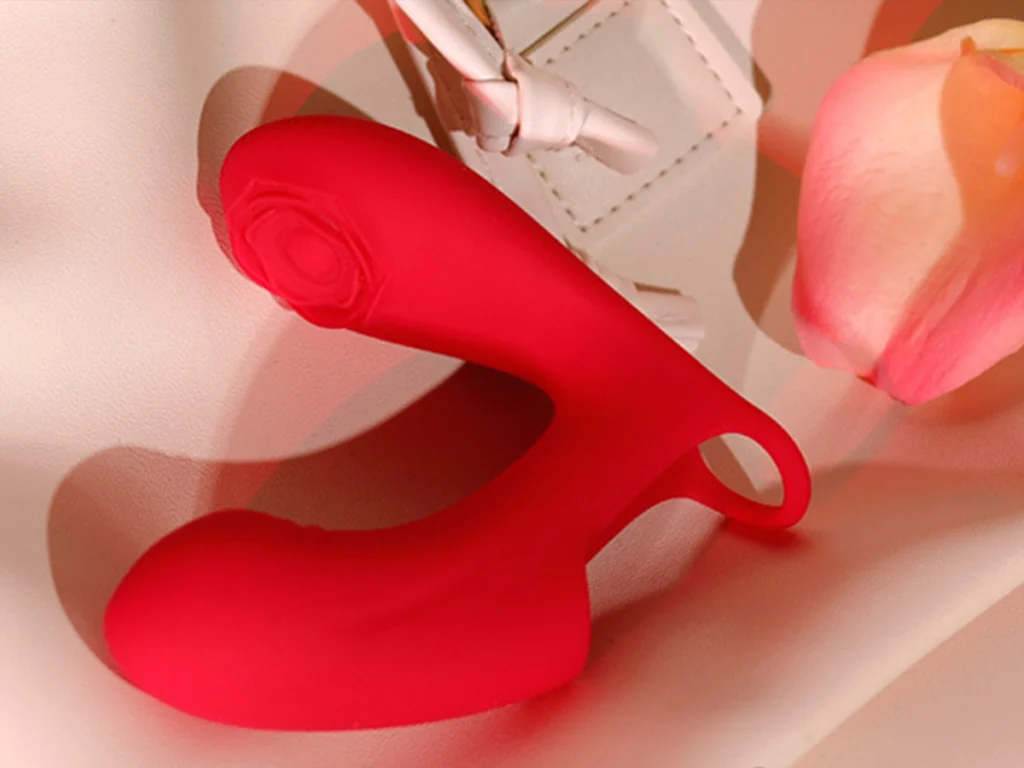
Choose sex toys suitable for sensitivity training
When the clitoris experiences desensitization or decreased sensitivity, sex toys are more than just “pleasure tools”; they act like a personal trainer—helping to reawaken the nerves and gradually restore pleasure. The key is to choose gentle, controllable, and gradual types.
1. Low-frequency and gentle stimulation: gradually reawakening the nerves
Excessively strong vibrations can cause nerves to readjust to the intense stimulation, resulting in the opposite effect. The principle of sensitivity training is gentle and precise.
- Choose low-frequency vibration, prioritizing compact, speed-adjustable vibrators
- begin from the outer areas of the vulva and slowly explore towards the center of the clitoris
- The frequency and intensity should be adjusted to a level that is “just pleasurable but not numbing”
The goal is not to reach orgasm immediately, but to teach the nerves to respond to gentle stimulation. This allows the clitoris to gradually regain its ability to perceive subtle pleasure.
2. Sucking toys: Use gentle rhythms and avoid overstimulation
Suction toys are especially suitable for sensitivity training, but if the frequency or suction is too strong, they may cause nerve fatigue. The following methods can be used as a reference:
- Try it on the lowest setting first, and feel each adsorption and release
- Limit each use to no more than 5–10 minutes
- Include rest breaks in between to allow nerves a chance to recover
- Observe the clitoral response: If tingling or numbness occurs, stop immediately or reduce the intensity
This not only avoids overstimulation but also allows the clitoris to gradually learn to respond to gentle suction, thereby improving overall sensitivity.
3. Create a sensitivity-recovery routine
Sensitivity training is not a one-time event, but a periodic practice:
- Training Day: Gentle stimulation for 5–15 minutes, focusing on arousal rather than orgasm
- Rest days: Allow the clitoris ample time to recover and avoid continuous high-intensity stimulation
- Observation and Recording: Note down the responses to different methods to find the rhythm that suits you best
It is recommended to combine this cycle with sensory training, mental relaxation, and pelvic floor muscle exercises to allow the body, nerves, and mind to restore sensitivity simultaneously.
Choosing the right sex toys and mastering the pacing accelerate sensitivity training. Low frequency, gentle, and gradual approaches, combined with rest and observation, will gradually help your clitoris return from a desensitized state to a sensitive, active, and controllable state of pleasure.

Reactivate clitoral sensitivity
In this article, we focus on restoring and enhancing clitoral sensitivity. From understanding the clitoris and exploring stimulation methods, to sensory training, pelvic floor muscle exercises, and then to choosing suitable sex toys and psychological adjustment, each step supports the next.
Sensitivity training is not something that can be achieved overnight, but rather a gradual process: understanding your own body → gentle stimulation → independent exploration → toy assistance → psychological and sexual practice → gradually increasing sensitivity.
If this is your first time reading this series, I recommend starting with the first article: understanding the physiological structure of the clitoris, the mechanism of pleasure, and training methods step by step will allow you to maximize your own rhythm of pleasure.
The overall goal is clear—to reactivate and re-sensitize the clitoris, making every touch feel natural, comfortable, and pleasurable again.