Why do some women ejaculate during intercourse while others do not?
Have you ever thought, “Is it because the stimulation wasn’t enough that I didn’t squirt?” or “Is it because I don’t know how to squirt?” You’re definitely not the first person to think this way.
Today we’re going to talk about what exactly causes the body to shift into “eruption mode.”

Why is G-spot stimulation key to squirting?
Squirting is not a “mysterious talent,” but a natural reaction that occurs in some women when their G-spot is stimulated with sufficient intensity, angle, or rhythm.
Where exactly is the G-spot? Why is it so sensitive?
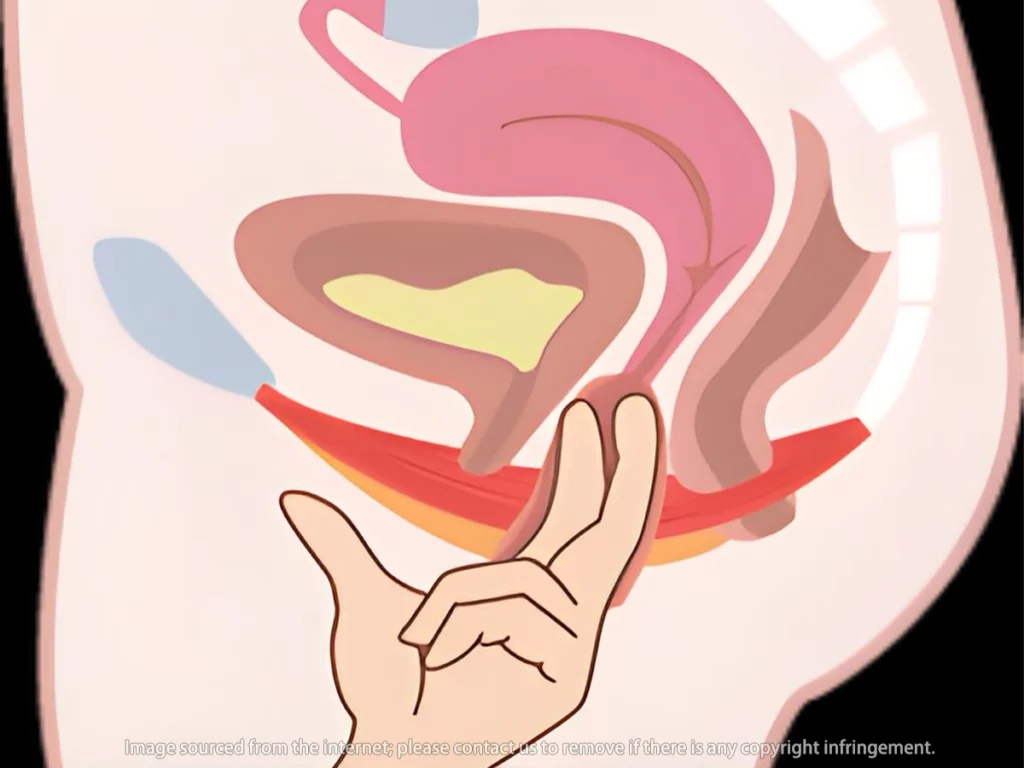
Imagine there’s an “inner sweet spot area” on the front wall of your vagina (the side facing your navel).
It’s not a button-like dot, but rather a thicker, more textured area.
- The spot is located about 2–3 cm inside the anterior vaginal wall.
- The texture is more like a “sponge” than other places.
- They become more sensitive to pressure and friction (especially after arousal).
What is the relationship between ejaculation and the G-spot?
When the G-spot is consistently and appropriately stimulated, some women’s Skene’s glands (located near the urethra) secrete fluid, which is squeezed out or released before orgasm. This is what most people refer to as “squirting.”
Note: This is not urine, nor is it because you did anything wrong, and it’s not something everyone does.
This is a possible natural physiological phenomenon and not a standard for assessing sexual ability.
So how should we stimulate this area?
From a woman’s perspective, the most important part isn’t “intensity,” but “aimed, focused pressure.”
The G-spot stimulation relies on pressure combined with a swaying, pushing motion, rather than high-speed, straight-line entry and exit.
You can refer to these directions:
1. Finger techniques (the most classic and precise)
- Bend your fingers slightly.
- Angle your fingers toward the navel.
- A gesture like “come here”
- The pace doesn’t need to be fast, but it must be steady.
Many people experience their first ejaculation sensation through this method.
2. Angle of the penis
If you are heterosexual couples having sex:
- The pain point isn’t in the “depth,” but in the “angle of the front wall.”
- An upward angle and a more horizontal thrust usually result in a better chance of reaching the G-spot area.
Don’t chase after high-speed, fast-thrusting motions. The G-spot is more about “gripping and pressure.”
3. G-spot stimulation toys (especially those with curved designs)
Sex toys specifically designed for the G-spot typically include:
- Bending head
- Slightly thicker front end
- A slightly stiffer material is needed to apply pressure.
They can reach that area more precisely than fingers or a penis, and the pressure is more consistent.
If the clitoris is your VIP pass to pleasure,
the G-spot is the special access that leads to deeper, more surprising sensations — including, sometimes, squirting.
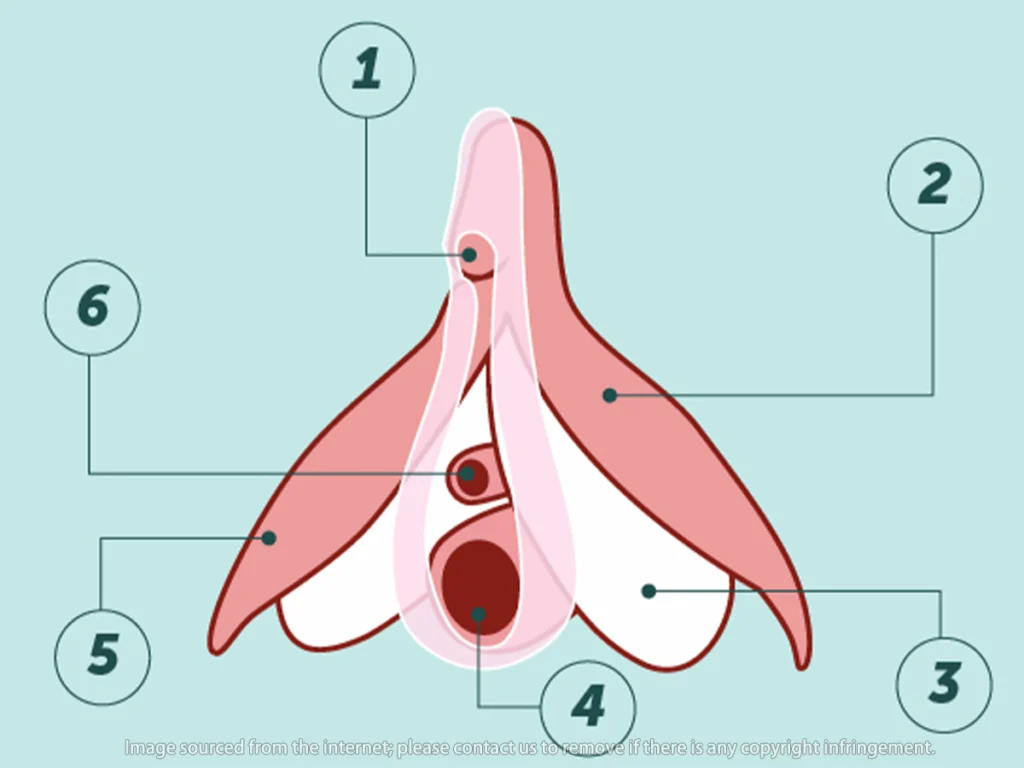
How important is clitoral stimulation for ejaculation ?
If the G-spot is the switch that makes ejaculation “possible,” then the clitoris is the power button that truly puts the entire system online.
Ejaculation is almost never “just from the G-spot.” More often, it’s a pleasurable duo of clitoris and G-spot stimulation.
Clitoris: The super nerve center of the pleasure realm
The clitoris has more than 10,000 nerve endings, and it is not as simple as a small dot; its internal structure is almost like “hugging” the anterior wall of the vagina.
This also explains why external clitoral stimulation can make the internal G-spot area more responsive.
This isn’t a myth; it’s simply the result of interconnected nerve pathways.
Why does clitoral stimulation make it easier for vaginal ejaculation to occur?
1. It helps you get into a “physical ready state” faster.
More blood flow, more lubrication, and greater sensitivity.
Simply put: it helps the G-spot warm up in advance.
If the G-spot is the area that “needs a little time to wake up,” then clitoral stimulation is like caffeine: “Wake up babe, we’re doing this.”
2. Ejaculation itself requires a high level of arousal.
A gush of moisture is not a reflection that “sprays out with the slightest touch”.
It’s more like this: your body only fully relaxes when you’ve reached a certain level of excitement.
The clitoris happens to be the most direct arousal accelerator.
3. Stimulating both internal and external factors together will produce a synergistic effect.
Research and countless practical experiences tell us:
- Isolated G-spot → Strong
- Isolated clitoris → Reliable
- Together → Sometimes the “Ultimate Bonus Round” will be activated.
This “hybrid stimulation” makes the G-spot area expand faster, the nerves become more sensitive, and it is easier to approach the threshold of the ejaculation response.
How to stimulate the clitoris to help a woman ejaculate?
1. Fingers + External Stimulation
You can:
- Apply gentle pressure around the clitoris
- There’s no need for direct, super-fast friction (that can sometimes disrupt the rhythm).
- The key is light pressure + continuous feeling.
This keeps your body in a “high-arousal state,” so that G-spot stimulation won’t exhaust you working alone.
2. Use with a vibrator (especially a small and precise one).
A lightweight, focused vibration toy can:
- Maintain a steady pace
- Keep the outside world excited
- No need to be flustered or distracted.
You can think of it this way: the clitoris is responsible for the atmosphere, the G-spot is responsible for the plot, and both together make for a smooth orgasm.
3. Synchronize with the G-spot, rather than competing with it.
Clitoral stimulation isn’t meant to “overshadow” the G-spot, it’s more like:
- Increase excitement
- Enhance the sense of touch
- Make it easier for your body to relax
Ejaculation is often not a matter of “technique,” but rather whether your body is relaxed enough, excited enough, and willing to let the reaction be released.

The influence of psychological factors on squirting
If the G-spot and clitoris are the “hardware system” of ejaculation, then the psychological state is the “software system.” Sometimes the body isn’t the problem at all; it’s the mind that’s constantly nagging in the background.
Relaxation: the key to whether your body can relax.
Ejaculation requires a state where the body is “willing to let go.”
But your brain says:
- “Wait, will I make a mess of the bed?”
- “This feels so weird, am I about to pee?”
- “Will he think I’m too messy?”
The moment these thoughts arise, your body immediately hits the brakes. It’s not that you can’t vent, it’s that your brain is pressing the pause button.
Many girls’ real experience is that their first ejaculation usually happens when they don’t think too much about it.
This is because they are unaware that they will experience squirting; they are relaxed, engaged, and not trying to “perform.”
Excitement level: Not just a little bit, but really high.
A gush of water is not a sudden leap “from zero to one”.
It’s more like:
- You are already very excited.
- When the body accumulates to a certain level
- Then suddenly let go
- It happened naturally.
This is why psychological excitement is more important than technique.
If your brain is still in a state of “some tension/uncertainty/distraction”, your body will not allow the valve to open.

Common mental disorders
Many girls aren’t “incapable” of doing it, but rather held back by the following psychological factors:
1. The panic of “Am I going to pee?”
This is a common confusion for all women.
This tension is almost the biggest obstacle to the gushing tide.
When you feel that pressure, your brain tells you, “Tighten! Hold it in!” Of course, your body can’t open up.
2. The embarrassment of “Will it get dirty?”
If you’re thinking “keep it clean” or “don’t make a mess,” the spurt might make you instinctively want to control it.
But ejaculation itself is a kind of “relaxation” bodily reaction.
3. Demonstrating anxiety
When you are thinking:
“Should I ejaculate?”
“Should I surprise him?”
Your body will usually tell you, “Nope.”
A climax cannot be forced, and ejaculation is not a performance.
4. Uncertainty about the partner’s response
If you’re unsure whether your partner will find it “too intense” or “overwhelming,” your body will naturally maintain a defensive stance.
Some women only begin to unlock this pathway when their partner explicitly states, “Whatever your body does is welcome.”

How do sexual positions affect female ejaculation?
If squirting is the “body’s performance,” then sexual positions are the “angles and adjustments” that support it.
To be honest from a woman’s perspective: whether or not you ejaculate doesn’t depend on difficult positions, but on “where to apply pressure” and “how to apply pressure.” What’s truly effective is often—small angles, fine adjustments, and precise impact.
Below, I’ve compiled a few positions that are particularly friendly to ejaculation, all based on the premise of “not having to do somersaults”.
1. Missionary + Pillow (Simple, yet surprisingly effective)
This is a “classic scene” for many girls’ first time squirting.
The secret isn’t the position itself, but rather—the pillow changes everything.
What happens if you put a pillow under your pelvis (not your lower back, not your buttocks, but your pelvis)?
- The entry angle becomes forward wall pressure
- The G-spot area is subjected to more direct “rubbing and pressing”.
- Feel more focused, pressure more precise
- A deep sense of stimulation can be achieved without much effort.
This is the kind of angle where you can feel, “Oh, this place has been found,” even if you’re lying still.
2. CAT: Coital Alignment Technique
Sounds like textbook terminology, right? Actually, its essence can be explained in a more everyday way:
“Instead of pursuing depth, let the pelvis rub against each other, like swaying together.”
CAT is a slightly upgraded version of the traditional missionary position:
- He moved his body slightly upwards.
- Not a straight line in and out
- Instead, the pressure is placed on the alignment of the clitoris and anterior wall.
- The two people create excitement through grinding rather than sprinting.
Why is it particularly effective for triggering squirting?
- Dual stimulation of the clitoris and G-spot is more synchronized
- The rhythm is stable and won’t get out of control.
- Your body is more likely to enter a “coming…coming…” relaxation-accumulation-release mode.
This is the kind of way that can make you unexpectedly discover “how I suddenly became so wet and so uninhibited”.

3. Doggy style (rear-entry)
The rear-entry position is highly effective for G-spot stimulation in many women.
However, the ejaculation is definitely not a speed test for those who enter later.
Truly effective last-in operations all have one thing in common:
- The insertion angle is “push towards the anterior vaginal wall”.
- Instead of “hitting the depths in a straight line”
You can try these fine-tuning methods:
- Bend over slightly, so that your back forms a slight arch.
- Keep your legs slightly together to concentrate the pressure.
- Alternatively, support yourself on your forearms, allowing your pelvis to lift naturally.
- Keep the angle of penile insertion slightly upward, rather than horizontal.
This “pushing” angle makes it easier to rub the G-spot, giving you that “pressure about to burst” feeling before you ejaculate.
Summarize
Squirting during sex isn’t as mysterious as it seems. It’s the result of a combination of physiological responses, psychological state, and stimulation methods. G-spot pressure, clitoral stimulation, level of relaxation, accumulation of arousal, and even the sexual positions you choose can all influence whether or not a woman squirts. It’s not a test of ability, nor is it some kind of “advanced technique”; it’s simply a natural way for a woman’s body to release tension under certain conditions.
Most importantly—everyone’s body is different, so it’s perfectly normal if you don’t spray; squirting doesn’t mean you’ve “achieved something.” You’re simply experiencing your own path to pleasure.