BDSM—does it sound a bit scary? It seems like something that only appears in late-night movie scenes, or conjures images of whips, candles, and complicated rules. But actually, BDSM doesn’t necessarily have to be painful, nor is it just extreme role-playing. BDSM can also be a romantic, gentle, and interactive activity.
The essence of a BDSM relationship is trust.
Mild BDSM is not at all like the “dark basement mode” in movies. It’s more like an intimate collaboration between two people with strong mutual understanding, small adventures, and mild stimulation.
The core keywords of mild BDSM are only three: romance, tenderness, and interaction. It’s not about pain, harshness, or “I want to control you.” The real focus is: I trust you, and you are willing to give me a little bit of control.
For example, blindfolding, light touching, guiding postures, or whispering a slow command in the ear—these are all examples of mild BDSM.
This is the essence of BDSM:
- It’s not about force, but about trust.
- It’s not punishment, it’s cooperation.
- It’s not about “what I do for you,” but about “what we create together.”
When you replace “fear” with “curiosity,” and “being controlled” with “being cared for,” you will understand—that mild BDSM is the gentlest game between couples.

How to safely enter the world of BDSM
If this is your first time seriously trying BDSM, the first thing you need to learn is “safety.” Don’t jump in headfirst before you’ve figured out what you really want to do and what you don’t want to do.
1. Clearly define what you “like” and what you “absolutely cannot”.
You don’t need to figure it out right away, but you must know these key points:
- Are you interested in “psychological control,” “mild restraint,” “blindfolding,” or “guided movements”?
- Which projects will you never touch? (This is called a “hard boundary,” sacred and untouchable)
- What are some things you might be willing to try, but would take it slowly? (Soft boundaries)
If you don’t even know your own boundaries, then it’s even less likely that others will take responsibility for you.
2. Choose a partner you can truly trust.
In the world of BDSM, there are far more fake Doms than real ones. Real Doms respect boundaries, are willing to communicate, and won’t pressure you to “go all out.” If someone acts like they “know your body better than you do,” back off immediately. That’s not Dom; that’s a warning sign.
No matter where you met, remember this: a partner who can communicate well is a safe partner.
3. Establish a very clear security mechanism.
Even mild BDSM requires rules.
- Safety words: Use simple “red light/yellow light/green light” instead of “uh-huh” or “no,” as they are completely useless in the moment.
- Confirmation mechanism: You can stop at any time without explanation.
- Aftercare: Instead of just leaving after the event, we hug, chat, drink water, relax, and take care of each other’s emotional state.
4. Start with the simplest scenario.
BDSM beginners don’t need a full 10-piece BDSM leather armor set. You only need:
- A soft rope or silk scarf
- A blindfold
- A little bit of instructions and interaction
- Someone who will truly listen to you
5. Want to improve? Then learn, observe, and reflect.
Read more professional materials, consult reliable sources, and communicate with experienced players. Don’t be misled by the filters of social media, and don’t treat BDSM as a perverted game where “the more intense, the more sophisticated.”
Only when you master the four skills of “safety,” “communication,” “boundaries,” and “trust” have you truly stepped into the door.

Recommended Mild BDSM Play
BDSM beginners don’t need those “professional-looking” leather gear. The charm of light BDSM lies in its simplicity yet effectiveness.
The following are the most commonly recommended ways to start playing:
1. Blindfolding
Blindfolding is the most recommended technique in BDSM. You don’t have to do anything; just make sure the other person can’t see you, and their sense of touch, hearing, and anticipation will be instantly heightened.
The power of being blindfolded lies in the fact that even if you don’t touch them, the other person will start to “fill in the blanks” in their mind.
Psychological expectations are themselves part of the stimulus.
2. Temperature Play
Want to make your senses instantly more acute? Temperature is the safest way.
- Ice cubes glide across shoulders and neck
- Warm palms pressed against the inside of the thighs
- Gently touch the skin with a cold metal spoon
These common little gadgets can make the other person’s body automatically more sensitive to every movement you make.
3. Verbal Play
One point that beginners often overlook is that language itself is part of the power dynamic.
You don’t need to shout, nor do you need to use “domineering CEO-style lines”.
Just replace your usual “Can I?” with…
“Now, lift your legs up.”
A steady, confident tone with a hint of command—the atmosphere is immediately set.
If you’d like to take it a step further, you can try a slight teasing, but remain respectful and avoid any pitfalls.
4. Position Guidance
Posture guidance is the most underrated form of light BDSM play.
You don’t need to forcefully restrain them; you only need to gently adjust their position.
- Place your hand on the other person’s waist and guide them to lean forward.
- Hold the chin and make the other person look up.
- Hold their wrists and guide them to lean back on the sofa.
This isn’t “coercion,” but rather a gentle yet clear sense of leadership. The other person knows you’re guiding them, rather than testing them haphazardly.
5. Soft Bondage
Just a little restraint is enough; there’s no need for complicated rope bondage like in erotic movies.
Best for BDSM beginners:
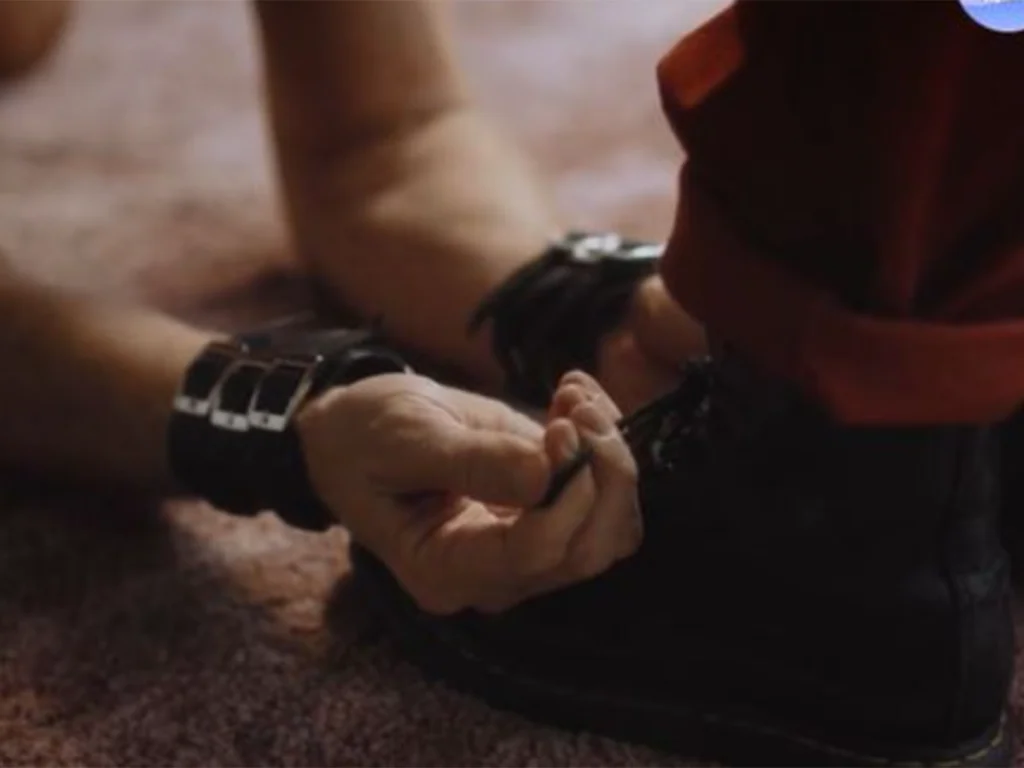
- Wristband tied with a silk scarf
- The straps gently restrict movement.
- Soft handcuffs
The key is not to “bind the other person,” but to “make the other person realize that you are in control of the pace.”
With just a slight restriction, the body naturally enters a “guided” state.
Mild BDSM doesn’t require pain, scares, or a prop cabinet. All you need is a little creativity, a little guidance, and a little courage .
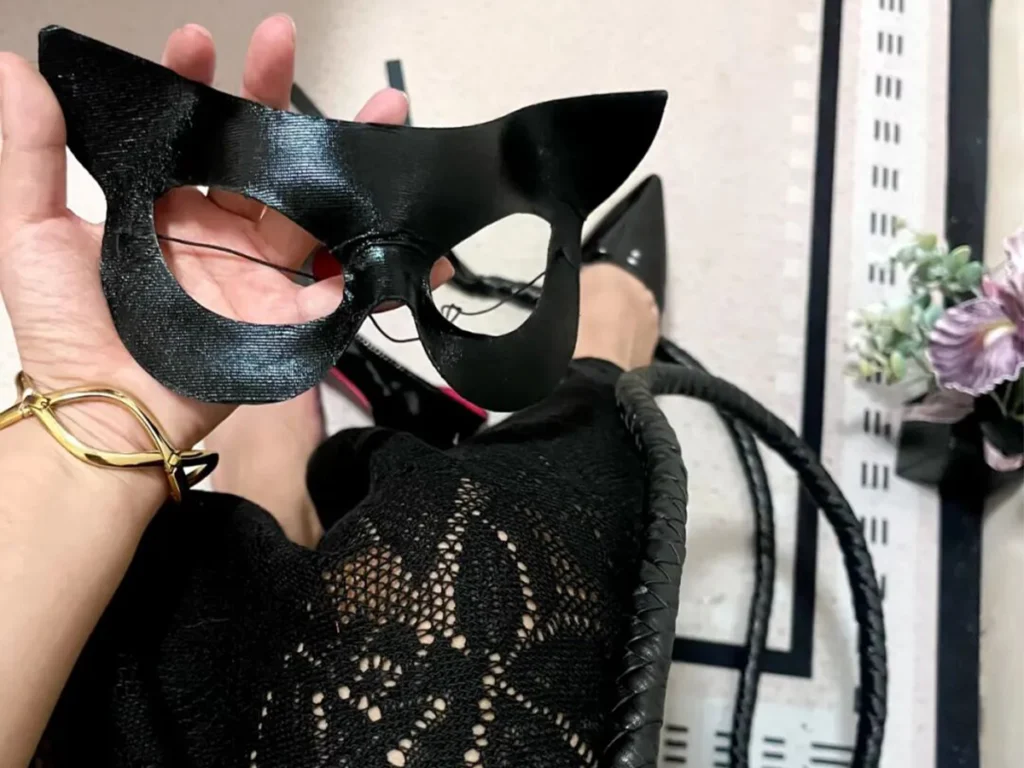
Safety and psychological preparation for BDSM
In BDSM, technology is always secondary.
What truly determines whether you can have a good time, play for a long time, and have a comfortable time is—your mental state plus your ability to judge the other person’s state.
If you can’t tell whether the other person is ready, everything you do will feel awkward.
If you ignore the other person’s emotions, no matter how “professional” you are, it will only be a failed experience.
1. The other person is genuinely “willing,” not just trying to please you.
The biggest mistake many beginners make:
I assumed that the other party’s nod meant acceptance.
No, nodding simply means “not refusing”.
There are several signs of genuine “willingness”:
- They asked questions (indicating engagement).
- They will indicate whether they like or dislike a particular direction.
- Their tone was relaxed.
- They will proactively respond with some playful energy.
If the other person is saying “Um…whatever” the whole time, it means they are not prepared at all.
2. The quieter your partner is, the more attention you should pay to them.
Quiet isn’t always enjoyable; sometimes it just leaves you stunned.
Especially when you start to take the lead, if the other person becomes particularly silent and doesn’t speak—it’s not because they’re excited, but because they’re not feeling well and are afraid of ruining the atmosphere, and don’t know what to do.
At this point, you can simply ask a confirmation: “Are you feeling alright right now?” This won’t spoil the mood; it just gives the other person a chance to express their thoughts.
If they answer quickly and easily, that’s fine.
If they hesitate, pause, or harden their tone, then you should slow down.
3. Pay attention to the other person’s physical reactions.
When a person truly enjoys something, their body will tell you:
- Breathing becomes deeper and faster
- Your body will naturally lean towards you.
- The fingers will gently grasp, curl, and touch.
- The neck will relax, and the shoulders will not be tense.
The following reactions are a signal to “stop”:
- My shoulders are as stiff as a board.
- The body subconsciously avoids
- Her expression was pained, revealing a look of endurance.
- Eyes wandering and unfocused
This isn’t “shyness,” but rather that the other person isn’t ready yet.
4. You must be able to accept rejection, otherwise don’t engage in BDSM.
If you prefer to be in control, then you must learn to accept the other person saying “no.”
When the other person says no, you should be able to let it go immediately, without getting angry or emotional.
A mature Dom doesn’t interpret rejection as a personal attack. Instead, they think, “Okay, I understand your boundaries, so I will guide you better.”
This is the mindset of being prepared: you can lead, but you never force.
5. You must be able to “laugh” about this.
If you can laugh it off about a small mistake, it means that both of you are relaxed and trust each other enough.
Mild BDSM is never about cool rituals, but about intimate interaction.
It truly enters healthy mode when you can play and maintain a sense of humor at the same time.
A sense of security isn’t built with props; it’s established through people’s hearts, the atmosphere, and observational skills.

Mild BDSM redefines intimacy for you
The real allure of BDSM lies not in ropes, commands, or those little gadgets, but in two people putting their trust in each other on the table, exploring together, taking risks together, and facing each other’s desires more honestly.
This is an experiment in trust. You give the other person power, and you also reveal your vulnerabilities; you can say “I’m willing,” and also “If it doesn’t work out, I’ll let you know.”
Through interaction, you learn to listen, express yourself, adjust, respect others, and even grow closer emotionally.
BDSM is not about pain or control; it’s about the trust between you two in giving yourselves to each other.