Vaginal orgasm is not a “hidden skill possessed only by a few.” For most women, it is a real physiological response that can occur, provided there is sufficient stimulation, the right angle, and a relaxed state of mind. This article will focus on the practical aspects: which techniques are most effective, which positions are more conducive to orgasm, how to make it easier for the body to reach orgasm, and what clear signals indicate that orgasm is approaching.
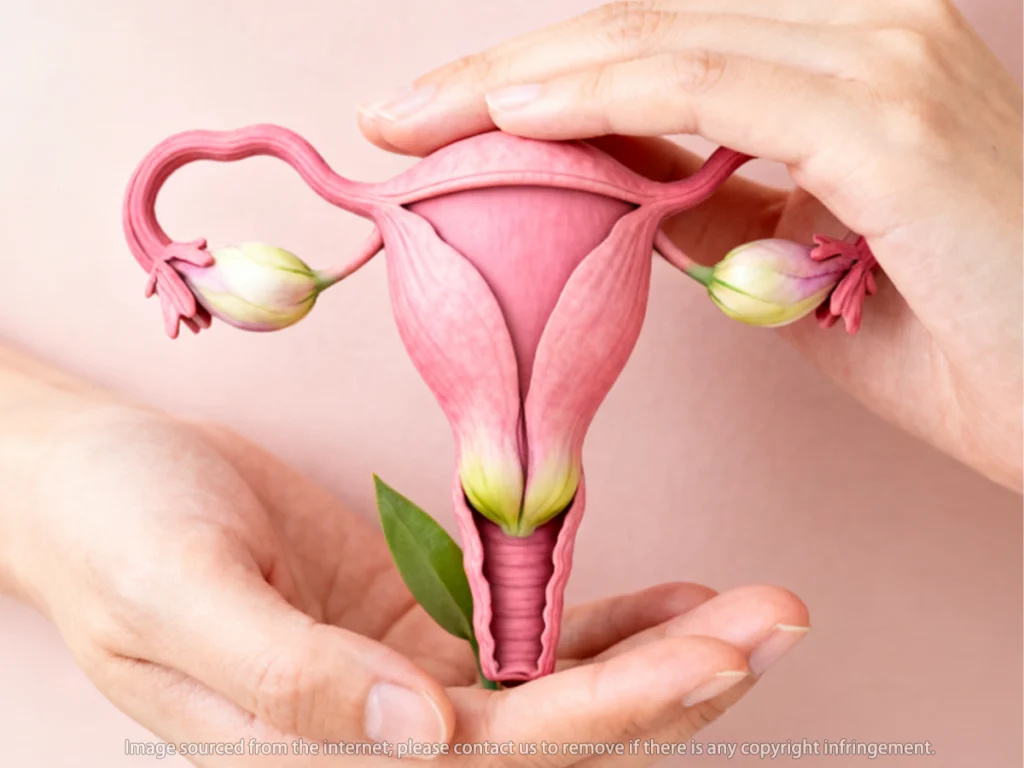
Techniques for achieving vaginal orgasm
If a vaginal orgasm is a performance, then foreplay is the “opening act.” Without sufficient preparation, even the best techniques may fail to produce the desired effect. Many women are not “difficult to orgasm”; their bodies simply aren’t fully prepared before penetration.
1. Foreplay needs to be long enough, really—the longer the better.
Most people think that vaginal orgasm depends on “what to do after penetration”, but the real key is actually before penetration.
When the body is slowly awakened, blood flows to the pelvic floor area, and the vagina naturally becomes more sensitive, the door to orgasm truly opens.
Think of foreplay as a warm-up or charging process:
The more you charge, the easier it will be later.
Half-charged? That’s like trying to perform on 10% battery.
So don’t rush, take it slow, let your body go from “Oh?” to “That seems good”, and then to “Don’t stop, I’m almost there”.
2. Clitoral Assistance: Not Cheating—It’s Smart
Many women can achieve vaginal orgasms, but only if the clitoris also receives some extra help.
This is not cheating; it’s a completely normal physiological mechanism.
Simply put:
The clitoris is the “start button,” and vaginal orgasm is the “intensifier mode.”
Running both systems simultaneously will double the experience.
The assistance method can be very natural:
- Gently trace or tap a rhythm with your fingers externally.
- A partner can use their hands or body for light external stimulation.
- Use toys (this combination is very familiar to readers in Europe and America).
The key point is: there’s no need to rigidly distinguish between the clitoris and the vagina; they naturally work together.
3. Relaxing your body + controlling your breathing = faster and more intense pleasure.
Tension is the biggest “brake” on vaginal orgasms.
When the body tenses, shoulders lift, and breathing becomes shallow, the pelvic muscles tighten too—making orgasm harder to reach.
To prepare the body:
- Take a deep breath and open up your ribcage.
- Relax your body, especially your pelvis.
- Let the rhythm guide you naturally, rather than trying to “chase the climax”.
You will find:
When the body is relaxed, the vaginal walls are more likely to contract rhythmically, and the feeling of being “rolled up” inside is significantly enhanced, which is precisely the core trigger point for vaginal orgasm.

Optimal sexual positions for vaginal stimulation
Let’s put the truth first:
There is no such thing as a “perfect position,” only “a position that you both find enjoyable.”
Any position, as long as the angle is right and the rhythm is in sync, can effectively stimulate the sensitive areas of the vagina.
In other words, it’s not the position that determines the orgasm, but how the two people “use” that position.
The common feature of these positions is that they make it easier to adjust the angle, depth, and pressure around the G-spot, thus making them more conducive to vaginal orgasm.
1. Traditional missionary
Don’t underestimate it.
Missionary is timeless because it’s highly adjustable:
The height of the legs, the angle of the pelvis, and the insertion route can all be varied from person to person.
A common “upgraded” version many Western women mention:
- Raise your legs a little higher (use a pillow).
- Move your partner’s body slightly upwards or downwards.
- Slightly change the direction of entry, pushing the angle upwards further.
This isn’t a major movement, but rather a subtle adjustment where a difference of just a few centimeters can completely alter the sensation of movement.
2. Rear entry (flexible, spacious, and easy to angle)
The advantage of rear entry is not “deeper penetration,” but rather that the angle is easier to adjust.
By tilting the pelvis forward or backward, stimulation can be more concentrated on the anterior vaginal wall, which is the area near the G-spot.
Want to make the sensations more evenly distributed?
Using a pillow or changing the angle at which your thighs are spread can affect the “coverage”.
Want to focus your energy better?
Leaning your body forward slightly, or even arching your back gently, can produce a more direct stimulus.
The key is that you can quickly find the “yes, that’s it” point and maintain a steady pace.
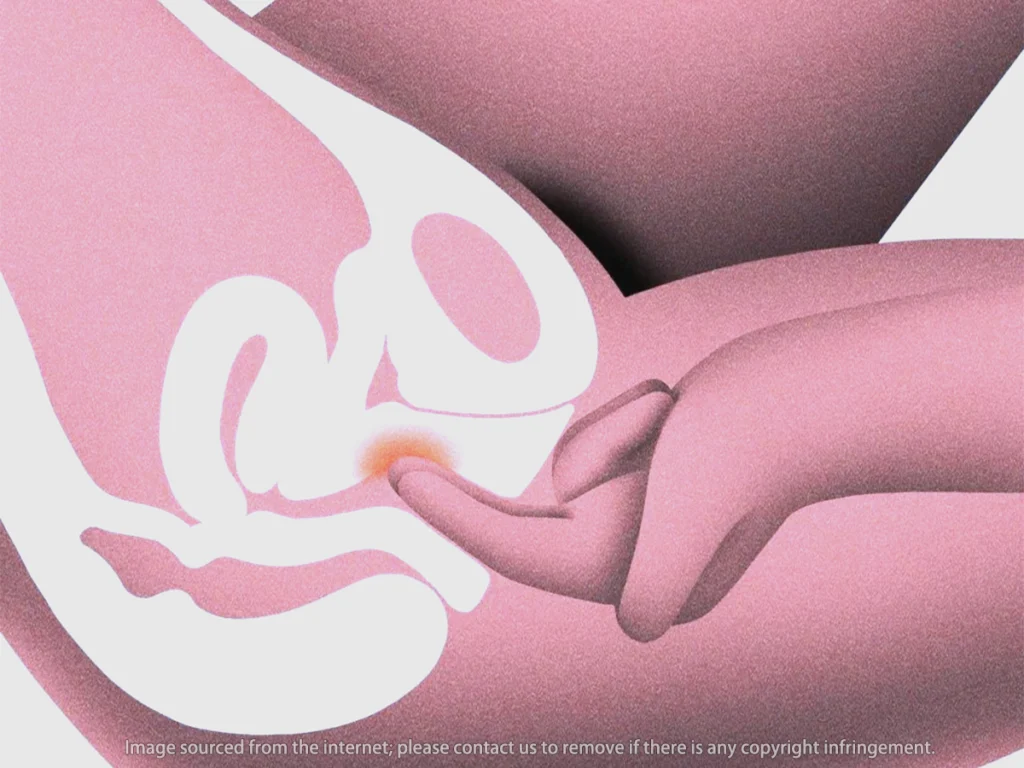
3. Woman on top (controlling the strength, rhythm, and direction)
The woman-on-top position is the queen of all “I want to precisely aim at my favorite angle” scenarios.
Because at this point you control the depth of your sitting, the angle of your rocking, and the rhythm of your forward and backward or up and down movements.
Many women share a common experience when they achieve vaginal orgasm:
It’s not about being “fast,” but about finding an angle that feels just right and then maintaining it repeatedly.
More importantly, the woman-on-top position can be easily entered into:
- Clitoral Assistance
- Slight swaying of the abdomen or pelvis
- A breathing rhythm that allows pleasure to spread upwards throughout the body
This greatly enhances vaginal orgasms.
How to broaden the range of pleasure? This is more important than the position itself.
Regardless of the position, some techniques can be used to make the stimulation more three-dimensional and not concentrated on a single point, but extended to a larger area—this is often the key to bringing vaginal orgasm to the surface.
Try these methods:
- Adjust the angle to make the entry direction more “upward” or “forward”.
- Let your body sway slightly with the rhythm, rather than remaining completely still.
- Keep your partner’s pelvis steady and close.
- The addition of mild clitoral contact simultaneously enhances sensitivity inside the vagina.
in other words:
You’re not chasing orgasms, you’re creating an environment where orgasms are more likely to occur.
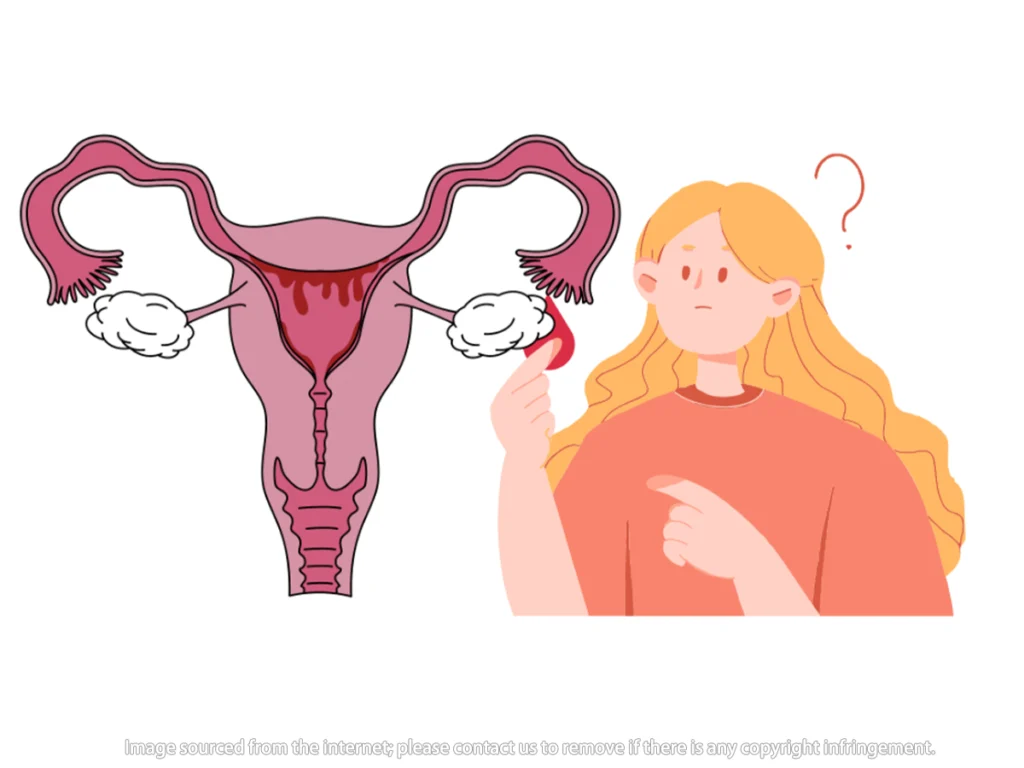
How can I make it easier for my vagina to reach orgasm?
A vaginal orgasm doesn’t happen by “suddenly hitting the right spot”; it’s more like the body gradually entering a certain state.
When lubrication is in place, the rhythm is comfortable, the mind is relaxed, and the body is willing to cooperate—orgasm will no longer seem so mysterious.
In other words, making your body more “orgasm-ready” is more important than trying to “force an orgasm.”
1. Lubrication is essential—it’s your friend and the one tool that never fails you.
Dryness puts the vagina into “defense mode,” while lubrication softens the tissue, makes the pressure more manageable, and allows for fine-tuning of depth and angle.
Whether you’re excited enough or not, you can:
- Double protection: natural lubrication + external lubricant
- Choose between water-based or silicon-based (depending on body position and rhythm).
- Don’t take the need for lubricant as a lack of arousal—see it as a way to make everything feel better.
However, most people’s attitude is: “Why not make things easier and better?”
2. Rhythm is far more important than “strength”.
Many women experience a sudden “rhythm interruption” that disrupts their state when they are close to orgasm.
So the key is not fast or slow, but rather—maintaining the rhythm your body currently prefers.
A simple rule:
- The more relaxed and synchronized your breathing, the easier it is to continuously stimulate sensitive points.
- The more consistent the rhythm, the more uniform the blood flow to the vaginal walls.
- Consistent engorgement → Better internal sensation → Easier buildup and spread of pleasure
In short:
Don’t “race” against the climax, but rather “resonate” with your body.
3. Mental guidance: The brain can sabotage or support pleasure more than you might expect.
There is a common point in European and American studies on orgasms—
Anxiety can directly shut down sexual sensation.
The greater the pressure, the more you want to climax quickly, and the more you worry about not being able to perform, the harder it is for your body to enter that relaxed, warm, and stimulating state.
Here’s how you can help your brain get on the right track:
- Shift your focus to bodily sensations, rather than the “result”.
- Allow yourself to slow down.
- Involve emotions and atmosphere (light, sound, touch—all count as psychological guidance).
- Avoid conversations that create a sense of pressure, such as questions like “Have you arrived yet?”
When your mind is in the right state, your body will naturally follow suit.
4. Self-exploration: No one knows you better than yourself.
Many Western women emphasize that knowing your own body is the fastest path to consistent vaginal orgasms.
Self-exploration does not mean doing “homework” alone, but rather:
- Understand the angles your body prefers
- Identify which part of the body stimulates when pleasure begins to increase.
- Try different internal sensations at different rhythms.
- Observe when you are most relaxed and most likely to get into a state of mind.
The better you understand your own reactions, the easier it is to guide your partner to that “just like” state during sex.
Self-exploration isn’t a substitute—it’s a guide that improves the experience.

Body signals of vaginal orgasm
Vaginal orgasms are not like the “one-second explosive special effects” in movies.
It’s more like the body warming up gradually, then suddenly syncing into a deep, rolling rhythm.
If you’re unsure whether you’ve truly arrived at your destination, the following signals can help you decode what your body is doing.
1. Vaginal pulsation: like tiny internal “heartbeats”
This is the most typical, reliable, and least “imaginable” climax signal.
When the vagina is fully stimulated and its sensitivity reaches its peak, rhythmic contractions will occur inside, like pulsations spreading outward from deep within.
The feeling is usually:
- Uncontrollable
- It’s not a “forceful contraction,” but a natural “pulsation.”
- Wave after wave, with its own rhythm
Many women would describe it as: “It feels like my body pressed its own button and started pulsing on its own.”
2. Pelvic floor muscle twitching: The body’s true “response”
The pelvic floor muscles are the key players behind the scenes in the entire orgasm.
When the climax begins, they will involuntarily tighten, relax, and tighten again, forming a rhythm similar to a “step”.
If you feel:
- The pelvic area suddenly tightens automatically
- Involuntary, slight trembling in the groin and lower abdomen
- There’s an urge to get closer to more.
Congratulations, this is a very typical physiological response to vaginal orgasm.
These actions are usually not done intentionally; in fact, the less controlled they are, the more real they appear.
3. Breathing, facial expressions, and voice can become completely involuntary (this is a good thing).
When a vaginal orgasm is approaching, the whole body is actually “notified”.
You might notice:
- Breathing becomes faster and shallower, sometimes requiring a sudden, deep breath.
- Obvious changes in facial expressions: furrowed brows, slightly open mouth, and unfocused gaze.
- Unconscious changes in voice: softer, faster, or intermittent.
These are not “performances,” but rather the body releasing stress and spreading pleasure.
A common saying in sex education in Europe and America is:
“If she suddenly goes quiet, she’s probably close to climax.” – In other words, when you notice her suddenly become quiet, her body still, and her hands tightly gripping something, then she’s already experiencing orgasm.
Because the body is fully focused on the internal waves of pleasure, rather than anything else external.

Are post-sex vaginal reactions—itching, soreness, and air sounds—normal?
We just discussed the signals and techniques for vaginal orgasm, but even after orgasm, the vagina continues to “speak.” You might notice: sometimes itching, sometimes pain, or even some embarrassing little sounds (yes, farting). Don’t worry, these are all normal physiological reactions.
In the next article, we will analyze the reasons for these phenomena in detail and share tips to make the vagina more comfortable after intercourse. Whether it’s itching, pain, or minor accidents, there are scientific explanations and simple coping methods.
If you want to make your sexual experience both enjoyable and comfortable, you absolutely can’t miss the next article—it will help you understand your body and take better care of yourself.