An introductory guide built on experience, trust, and psychological connection.
To be honest, when I first encountered rope bondage, I wasn’t attracted by the “hardcore techniques,” but rather by the feeling of my body being gently bound while my mind slowly relaxed. Many people imagine BDSM as “intense,” but the real world of rope bondage is quieter, more delicate, and relies more on communication than you might imagine.
To me, a rope isn’t about “tying someone up”; it’s a thread that connects trust, focus, and intimacy between two people.
The following content will guide you through a true understanding of the art of BDSM, from “psychological meaning → basic safety of rope bondage → light practice for couples → sensory control techniques”.
It’s not about chasing intensity, but about understanding why “a restrained body can make the mind feel freer.”

The meaning of bondage in BDSM: Bondage is a symbol of trust.
Restraint is not control, but a symbol of trust.
If you’ve never experienced being tied up, you might think that “ropes are a form of restriction.”
But once you try it yourself, you’ll find it’s more like a psychological switch—
When the body has to slow down, has to surrender…
At that moment, my mind began to soften and relax.
In my own experience, this kind of trust is very multifaceted:
As the bottom (the one who is bound)
You must trust that the other person will not cross the line, will see your expression, and will catch you at any time.
As Top / Rigger
You must stay fully focused and monitor:
- breathe
- skin color
- emotional reactions
- the tension and direction of the rope
You also need to read subtle shifts in their expressions, such as “I’m a little nervous but I’m willing to continue.”
Therefore, what truly captivates people is not the bondage acts, but that silent promise:
“I’m giving myself to you, you have to take good care of me.”
This sense of intimacy is more powerful than any technique.

What is a BDSM Rigger?
The one wielding the ropes is not a “sadist,” but more like an artist and caregiver.
When I first learned from professional riggers, I realized:
To truly bind someone, it’s not about being “strong,” but about being “stable.”
A qualified Rigger needs to:
- Know which parts are muscles and which areas contain important nerves
- Knowing how to tie it without causing stinging or numbness
- Able to control the strength, direction, and rhythm of the rope
- They can even read a person’s psychological state from their breathing and posture.
An even more skilled Rigger will treat the entire process as slow-motion art.
Especially Japanese Shibari, The beauty of body lines and rope patterns is impossible to fully capture in a photo.
What impressed me the most was:
A good rigger is never in a hurry.
His steadiness is what creates the other person’s sense of security.
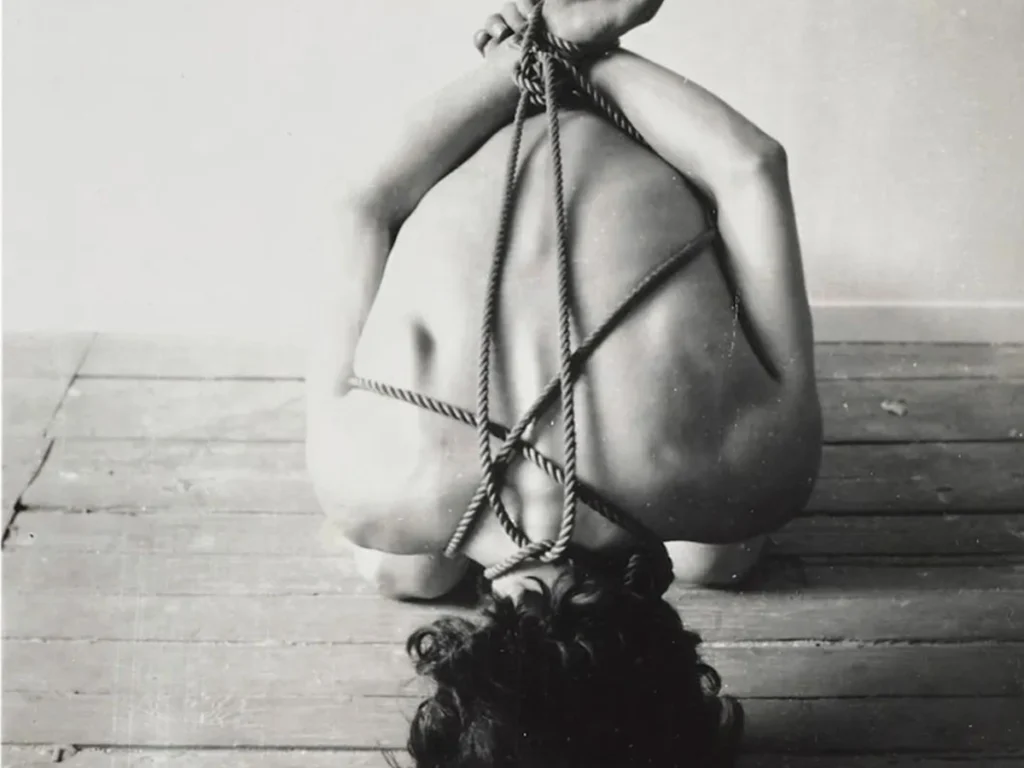
How to Tie a BDSM Rope (Beginner’s Guide)
1. Let’s start with the most basic method – Single Column Tie.
This is the starting point for all bindings, and it’s also the move that beginners should master first.
use:
It can be used to fix any “part” of the body, such as the wrist, ankle, arm, or thigh.
Why is it suitable for beginners?
- Easy to operate
- High security
- Less likely to compress nerves
- Even if you use it incorrectly, it won’t immediately cause an accident.
2. Next is the double-column tie.
It’s a little difficult, but still suitable for beginners.
use:
Tie the two parts together, for example
- Hands behind the back
- Bring your feet together
- Wrist + Ankle
- Hands tied to chair legs
Key points:
Don’t tie it too tightly, so you don’t restrict blood flow.
3. Tying methods that beginners should avoid for now.
If you have no experience, avoid these entirely for safety reasons.
- Suspension : Completely unsuitable for beginners.
- Hogtie : Can easily cause positional asphyxiation.
- Neck and areas with dense nerves: Do not tie them easily.

4. Safe Zone vs. Restricted Zone (Essential Knowledge)
Safe zone (more muscle, lower risk):
- Wrist
- Ankle
- Thighs
- Upper arm (light immobilization is sufficient)
No-go zones (high risk, could compress nerves or affect breathing):
- Neck
- Outer side of the upper arm
- Armpits, back of knees
- Chest
Bind the muscles, not the nerves.
5. How to choose BDSM ropes
For BDSM beginners:
- Cotton or hemp rope with a diameter of 5–6 mm is the most stable.
- Cotton rope is soft, easy to wash, and won’t irritate the skin.
- Hemp rope has a more “Japanese aesthetic,” but it requires maintenance (boiling, waxing, etc.).
Do not use:
- Nylon rope (too slippery and can cinch dangerously)
- Those super stiff ropes from hardware stores (You seem to have a grudge against your partner)
6. Safe Words and Communication (Don’t skip this, it’s crucial)
There is no BDSM without communication.
Set a safeword, for example:
- “Red” = Stop immediately
- “Yellow” = Slow down/Adjust
- “Green” = Very good, continue
You can even use quirky words, such as “pineapple,” “chocolate,” or “pause.”
As long as both parties remember, that’s fine.
The core of BDSM is not stimulation, but communication.
7. For beginners, the most important thing is practice.
You can start by:
- Tie a pillow
- Tie chair
- Self-practice
- Practice repetitive movements following a rope bondage tutorial.
Once you’re comfortable with the movements, you can practice with a partner.
BDSM bondage is not about “tying people up,” but about “making the other person feel safe, held, and cared for within the restraint.”
Technical skills can be learned gradually, but safety awareness must be cultivated from day one.

Bondage Sex Play for Couples – Mild BDSM
Want to add “trust + a little excitement” to your everyday sex life? Bondage is the simplest, most direct, and least complicated way to play. All you need is a scarf, a pair of handcuffs, and a blindfold .
Below, I’ll offer you the most practical beginner’s guide from the perspective of a seasoned player:
1. Handcuffs: The simplest “power switching” switch
Handcuffs are the MVP for all beginners. Metal ones, plush ones, even the cheapest ones in the toy store, can instantly create an atmosphere of “I’m handing myself over to you now.”
There’s only one key point: don’t turn it into an arrest scene. Slow, steady, and with a touch of ritual—hold your partner’s hands in front of or behind them to create a little sense of helplessness—that’s enough.
2. Scarf: The most understated yet versatile BDSM tool in your wardrobe.
What are the advantages of a silk scarf? It’s soft, not intimidating, and very sexy. You can:
- Hands tied
- Foot ties
- It can even be lightly tied around the thigh as a “posture aid”.
All the movements are like playing a gentle game, making it perfect for first-timers.
3. Eye mask: The simplest sensory amplifier
If you only want to try one prop, try the blindfold.
When the eyes are covered, the body’s other senses are instantly activated—sounds become more stimulating, tactile sensations become more pronounced, and the feeling of anticipation intensifies.
Tips for beginners
- Don’t bother with complicated knots; there’s no need.
- Bondage is for fun, not to see who is more professional.
- A simple “Does this feel okay?” matters more than any technique.
- Stay safe

Sensory deprivation and mild domination gameplay
If bondage is “physical restriction,” then sensory deprivation is “mental stimulation.” This is a technique loved by all experienced BDSM practitioners because it is simple, intense, requires no expensive equipment, and is ridiculously effective.
The goal is straightforward: to control the other person’s five senses and make pleasure unpredictable.
1. Blindfold: Let your brain scare itself (the kind that’s good).
Once sight is removed, the body naturally amplifies every touch.; even a finger gently gliding across your skin will feel like an electric current.
The key is not what you did, but that the other person “doesn’t know what you’re going to do next.” That sense of uncertainty is the source of your greatest excitement .
2. Earplugs: Cut off the noise and amplify your imagination.
When the world is put into “silent mode,” your partner becomes aware of their own breathing, heartbeat, and even the faint rustling of the sheets.—every sound becomes foreplay.
This will make them more immersed and more sensitive.
And even a light touch will make the other person think, “Is now the time?”
3. Whispering: The cheapest and most powerful tool for control.
Bring your ear close and lower your voice—what you say isn’t important, your tone is key.
Even just saying: “Don’t move.”
Or: “Wait a minute.”
Both instantly create tension, anticipation, and engagement.
4. Combination gameplay (so simple it doesn’t need a tutorial)
You can combine them like this—
- Blindfolded + Whispering
- Earbuds + Touch
- Blindfold + Earplugs + Make the other person wait a few seconds
A little reminder
- Safety first; avoid sudden, painful, or panic-inducing actions.
- Your tone should convey “control”; you don’t need to yell or act.
- The goal is not to scare, but to guide.

The constraints of the body are the liberation of the mind.
Ultimately, BDSM bondage, sensory deprivation, and mild dominance are never about “controlling” anyone, but about getting two people on the same wavelength, building trust, and opening their hearts wider.
You’re binding their body, but releasing their desires, vulnerabilities, and sense of safety.
What you took away was your sight, hearing, and freedom of movement, but what you give back is—being seen, being cared for, and being held.