A woman’s personal experience: From “feeling nothing” to truly enjoying stimulation
I’ve always felt that there are many common concerns among women about “low vaginal sensitivity,” but we’ve never had a relaxed and non-awkward space to talk about it.
I first realized that “it wasn’t just me who didn’t feel it clearly” when I was drinking with friends, and one of the girls suddenly said:
“I honestly feel nothing during penetration. Is there something wrong with my body?”
As a result, the three of us at the table immediately said:
- “Me too.”
- “I’m about the same.”
- ” I only feel it from a certain angle.”
So later I started to seriously try to understand—why are some women so insensitive during penetration? Are there any ways to train it? What exactly is “sensitivity”?
This article is a compilation of my own physical experiences, sharing from women around me, and information I’ve gathered on sexual medicine. It’s not a cold, doctor-style science article, but rather a woman’s genuine perspective:
What works, what doesn’t, what can change how you feel, and what’s just a rumor.

Why are some women less sensitive during penetration?
To be honest, the more I researched it, the more I realized that this wasn’t a case of “the body breaking down.”
More like:
your signal line just doesn’t communicate much to begin with, and your body hasn’t been trained to understand it.
Below are the most common reasons that I have compiled from my experience and research.
1) The nerve distribution in the vaginal wall is naturally uneven (your nerves are not damaged, it’s a structural issue).
I used to think that “all vaginal walls are sensitive,” but I later learned that:
- The outer third of the region has a relatively dense nerve network.
- The deeper you go, the fewer there are.
- The density of nerve cells varies greatly from person to person.
In other words, some girls’ “VIP sensitive spots” are naturally smaller or deeper.
If you don’t get the stimulation you need, you’ll feel:
“Hmm? Is anyone there?”
Completely normal.
2) Weak pelvic floor muscles = lack of elasticity = naturally less sensation
I was only enlightened during my first professional pelvic floor examination.
The physical therapist told me:
“It’s not that you can’t feel it, but that your pelvic floor muscles are unable to ‘push’ the stimulation to the nerves.”
It clicked instantly:
A weak pelvic floor is like a soft, flimsy sofa that doesn’t react no matter how you press it.
A strong pelvic floor is like a trampoline; it bounces back with a “poof” sound when you press down even slightly.
Common causes of pelvic floor weakness:
- Prolonged sitting (almost all office workers are affected)
- Stress-induced tension can actually lead to fatigue
- Muscles can be overstretched after childbirth
- Lack of use
The training methods will be discussed later.
3) Psychological tension is a “signal shut-off device”.
I personally feel this very strongly.
When under pressure, concerned about performance, or close to people you don’t trust, your body feels like it’s locked up:
- Less responsive to stimulation
- Decreased humidity
- It’s harder to get into the mood during foreplay.
- Slower nerve responses
It’s not that you’re insensitive; it’s that your body is protecting itself.
It’s like when someone massages your shoulders while you’re rushing to finish a report; you might not feel anything.

So—can vaginal sensitivity be trained?
Yes, it can.
Moreover, it’s more “beginner-friendly” than you might imagine; you don’t need to be a fitness fanatic or use expensive equipment.
The following methods are a “valid list” that I have personally tried, my friends have tested, and that has been verified by relevant data.
Method 1: Pelvic floor muscle training (Kegel), but it’s important to do it “correctly”.
Many girls say, “I’ve tried doing Kegels, but they didn’t work.”
But I later found out:
- 70% of girls actually made mistakes.
What you need to practice is:
- Tighten → Hold → Relax → Completely Relax
- Rather than the kind of tension that makes you blush and hold your breath.
A little trick (I found it very effective after trying it myself):
- Do 10 while using your phone at work.
- Do 10 while watching a show
- Do another set before bed.
- Remember to take the “completely relax” step each time.
If you do it correctly, You’ll start noticing clearer changes in about 2 to 4 weeks:
- Increased feeling of being enveloped during insertion
- You can better perceive the position and angle
- The feedback from the stimulus is relatively direct
This is when the pelvic floor muscles start to “come online”.
Method 2: Increase blood flow to the lower body = increase nerve sensitivity
Many studies have shown that sensitivity has a linear relationship with blood flow.
But don’t overthink it; the most effective method is actually:
Longer foreplay
It’s not “for romance,” but because you need blood to concentrate in the vaginal walls.
Sucking or vibrating toys
Especially types that can stimulate the clitoris or surrounding nerves,
It helps wake up the entire area.
Exercise (it really works)
Even 15 minutes of light exercise can increase blood flow to the lower body.
My usual combination is:
Light exercise → hot bath → foreplay → the sensation of penetration will immediately change drastically.
Method 3: Lubrication + Psychological Relaxation (These two are often overlooked, but they are actually extremely important)
Lubrication is not a sign of “insufficient excitement”.
Lubrication helps nerves receive stimulation more directly.
When your body is dry, it’s busy “protecting itself”.
How could your body focus on sensitivity then?
Psychologically, the most obvious influencing factor is:
- Worried that my reaction time is not fast enough
- Afraid of getting into the zone too slowly
- Care about the other person’s expectations
- Body tense
The more tense you are, the less your nerves function.
Sometimes it’s not that girls are physically insensitive, but rather that their “brain isn’t working yet.”

How can I make penetration more pleasurable? (This is the most frequently asked question by girls.)
The following are some insights from the experiments my friends and I have conducted the most (remove this sentence entirely).
1) Angle: Even a slight adjustment can make a big difference in the feel.
You can try:
- Place a pillow under your hips
- Lift your waist slightly
- The pelvis tilts slightly forward or backward
Not a large change, but the kind that’s “so small that others won’t notice.”
Many girls’ real sensitive spots aren’t actually in the center, but rather:
- Upper anterior wall
- A certain side
- Or even shallower locations
Finding the right location will result in one of the following:
“Oh? I have a feeling about this!”
2) Rhythm: Slow is actually quite intense
I used to think that “fast = exciting”.
It was later discovered that:
Slow, stable, and regular -> nerves are most receptive to stimulation.
A sudden increase in pace or an erratic rhythm can actually disrupt your nerves.
Many girls (including me) believe that:
- Slow speed
- Pause slightly
- Slightly change direction
The response is often much stronger than a rapid sprint.

3) Gently perform Kegel movements during insertion (but do not apply excessive force).
This trick is truly amazing.
It wasn’t as tight as if it were clamping something, but rather:
- Gently tighten just a little
- Experience it
- Relax again
You’ll find yourself suddenly becoming “very involved”.
You’re no longer passive—you’re engaging with the sensation.
4) Use masturbation to explore your own “vaginal map”
One study mentioned:
The more a woman understands her own body, the more pleasure she will experience during penetration.
You can use:
- Fingers
- Small toys
- Different angles, different directions
Go find that spot where you feel “hmm… this is definitely more comfortable”.
Once you find it, the sensation of penetration will be greatly enhanced, whether you’re alone or with your partner.
5) Communication is more effective than any skill.
The most effective instruction is never a trick:
Instead:
- “This is the angle.”
- Slow down.
- “Stop here.”
One sentence from you is more accurate than ten guesses from him.
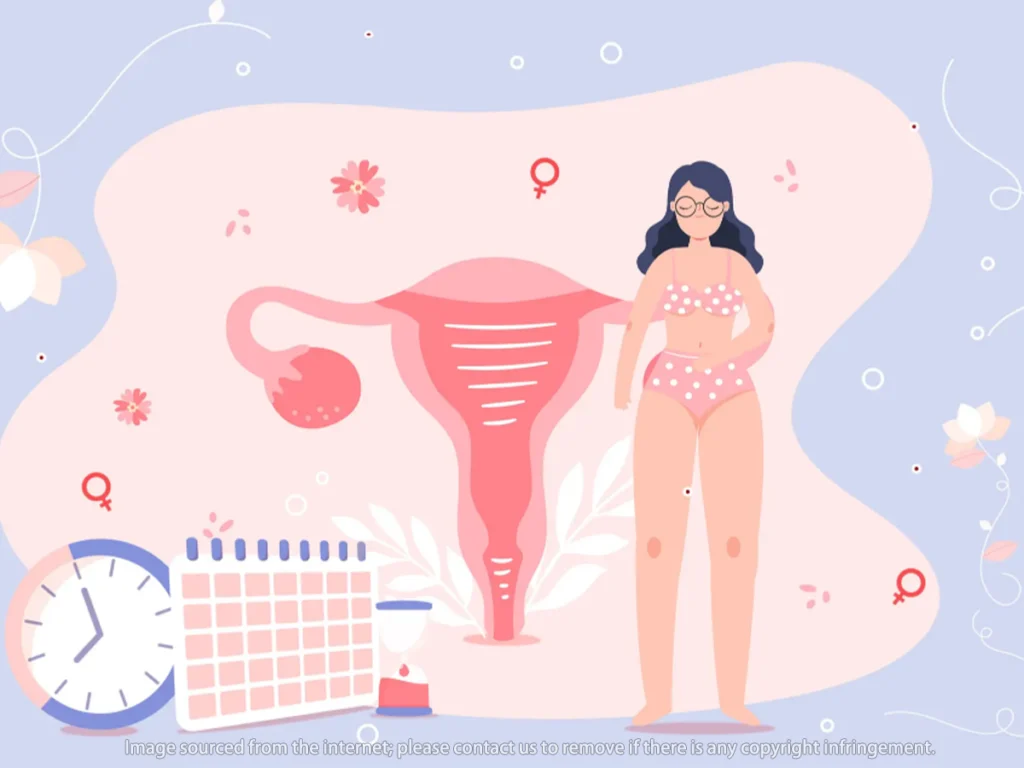
Finally: Vaginal sensitivity is not innate—it can be trained.
If I could only remember one sentence, I hope it would be this:
Vaginal sensitivity is not a gift; it can be trained, awakened, and enhanced.
Your body isn’t sluggish, it’s just that:
- Nerves need more blood flow
- The pelvic floor muscles need to be re-engaged
- Your mind needs relaxation
- The angle needs to be found
- You need to become more familiar with your body.
When everything is aligned, that “Oh! I finally feel it!” moment is very real.
A girl’s body is inherently intelligent; it’s just that no one ever teaches us how to cooperate with it.
If you’d like, this article could be the “beginning of that collaboration.”